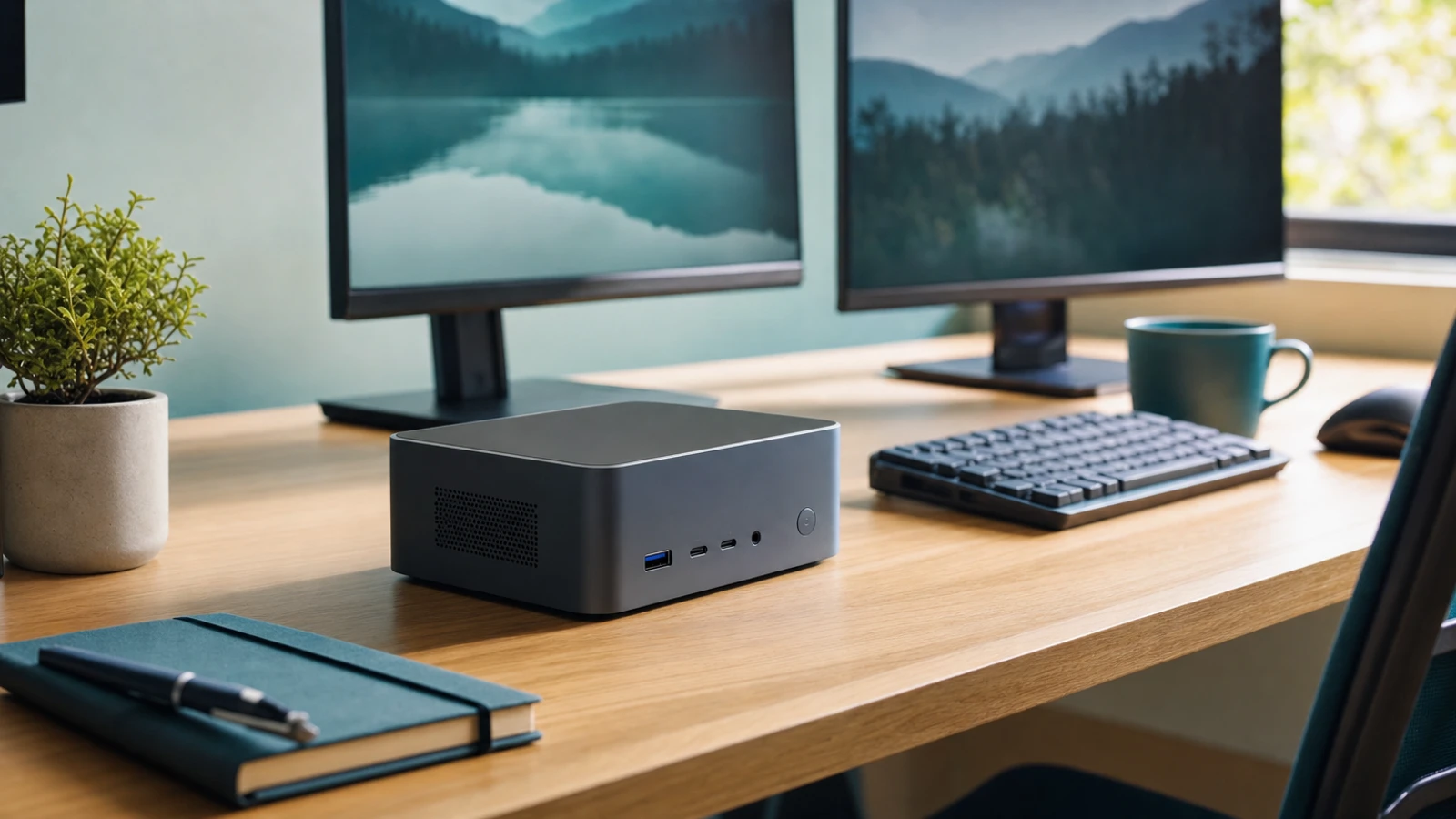
This support page focuses on mounting, footprint, and small-desk organization for mini PCs. The main shortlist covers products; this page keeps the setup decisions practical.
Mounting, Footprint, and Small-Desk Organization
Small is only useful when reachable. A mini PC can free desk space, but it should not make power buttons, USB ports, or troubleshooting impossible. Mounting behind a monitor works best when cables and access remain sane.
VESA mounts need compatibility checks. Some mini PCs include brackets; others require optional hardware. Check monitor mount patterns, screw lengths, clearance, and whether the combined setup still allows monitor adjustment.
Reception desks need tidy resets. Shared stations collect notes, labels, scanners, receipt printers, and cables. A mini PC should make the station easier to reset at the end of the day, not create a hidden knot of adapters.
Power bricks need a home. The computer may be tiny while the power adapter is not. Plan where the brick sits, how it is secured, and whether it blocks outlets or looks messy below the desk.
Leave room for service. If someone has to unplug a frozen device, add a drive, or check a serial number, the placement should allow it without dismantling the entire workspace.
Office setup decision notes
Office scenario 1: Small is only useful when reachable. Recheck this point with the actual desk role in mind because a mini pc can free desk space, but it should not make power buttons, usb ports, or troubleshooting impossible. mounting behind a monitor works best when cables and access remain sane. A mini PC should make the station cleaner and easier to support, not simply smaller in a product photo.
Setup cue 1. For mounting, footprint, and small-desk organization, place the monitor, keyboard, mouse, webcam, printer or scanner cable, network cable, and power brick on a sketch of the desk. If the plan creates a hub chain, hidden heat pocket, or unreachable port, compare a different configuration before buying.
Return-window test 1. During the first week, install the real office apps, open the usual browser tabs, join a video call, connect every peripheral, and restart the machine after updates. That practical trial says more than a generic benchmark for basic office work.
Support note 1. Write down the exact ports used, display settings, login handoff, backup location, and restart steps for this station. If mounting, footprint, and small-desk organization matters to the desk role, a short setup note can save time when another employee, family member, or technician has to understand the compact computer later.
Budget check 1. Compare the mini PC price with the hidden extras: monitor cable, hub, mount, keyboard, mouse, webcam, speakers, Windows license, backup storage, and replacement power adapter. A slightly larger or better-equipped model can be cheaper in practice when it removes adapters and support calls.
Office scenario 2: VESA mounts need compatibility checks. Recheck this point with the actual desk role in mind because some mini pcs include brackets; others require optional hardware. check monitor mount patterns, screw lengths, clearance, and whether the combined setup still allows monitor adjustment. A mini PC should make the station cleaner and easier to support, not simply smaller in a product photo.
Setup cue 2. For mounting, footprint, and small-desk organization, place the monitor, keyboard, mouse, webcam, printer or scanner cable, network cable, and power brick on a sketch of the desk. If the plan creates a hub chain, hidden heat pocket, or unreachable port, compare a different configuration before buying.
Return-window test 2. During the first week, install the real office apps, open the usual browser tabs, join a video call, connect every peripheral, and restart the machine after updates. That practical trial says more than a generic benchmark for basic office work.
Support note 2. Write down the exact ports used, display settings, login handoff, backup location, and restart steps for this station. If mounting, footprint, and small-desk organization matters to the desk role, a short setup note can save time when another employee, family member, or technician has to understand the compact computer later.
Budget check 2. Compare the mini PC price with the hidden extras: monitor cable, hub, mount, keyboard, mouse, webcam, speakers, Windows license, backup storage, and replacement power adapter. A slightly larger or better-equipped model can be cheaper in practice when it removes adapters and support calls.
Office scenario 3: Reception desks need tidy resets. Recheck this point with the actual desk role in mind because shared stations collect notes, labels, scanners, receipt printers, and cables. a mini pc should make the station easier to reset at the end of the day, not create a hidden knot of adapters. A mini PC should make the station cleaner and easier to support, not simply smaller in a product photo.
Setup cue 3. For mounting, footprint, and small-desk organization, place the monitor, keyboard, mouse, webcam, printer or scanner cable, network cable, and power brick on a sketch of the desk. If the plan creates a hub chain, hidden heat pocket, or unreachable port, compare a different configuration before buying.
Return-window test 3. During the first week, install the real office apps, open the usual browser tabs, join a video call, connect every peripheral, and restart the machine after updates. That practical trial says more than a generic benchmark for basic office work.
Support note 3. Write down the exact ports used, display settings, login handoff, backup location, and restart steps for this station. If mounting, footprint, and small-desk organization matters to the desk role, a short setup note can save time when another employee, family member, or technician has to understand the compact computer later.
Budget check 3. Compare the mini PC price with the hidden extras: monitor cable, hub, mount, keyboard, mouse, webcam, speakers, Windows license, backup storage, and replacement power adapter. A slightly larger or better-equipped model can be cheaper in practice when it removes adapters and support calls.
Office scenario 4: Power bricks need a home. Recheck this point with the actual desk role in mind because the computer may be tiny while the power adapter is not. plan where the brick sits, how it is secured, and whether it blocks outlets or looks messy below the desk. A mini PC should make the station cleaner and easier to support, not simply smaller in a product photo.
Setup cue 4. For mounting, footprint, and small-desk organization, place the monitor, keyboard, mouse, webcam, printer or scanner cable, network cable, and power brick on a sketch of the desk. If the plan creates a hub chain, hidden heat pocket, or unreachable port, compare a different configuration before buying.
Return-window test 4. During the first week, install the real office apps, open the usual browser tabs, join a video call, connect every peripheral, and restart the machine after updates. That practical trial says more than a generic benchmark for basic office work.
Support note 4. Write down the exact ports used, display settings, login handoff, backup location, and restart steps for this station. If mounting, footprint, and small-desk organization matters to the desk role, a short setup note can save time when another employee, family member, or technician has to understand the compact computer later.
Budget check 4. Compare the mini PC price with the hidden extras: monitor cable, hub, mount, keyboard, mouse, webcam, speakers, Windows license, backup storage, and replacement power adapter. A slightly larger or better-equipped model can be cheaper in practice when it removes adapters and support calls.
Office scenario 5: Leave room for service. Recheck this point with the actual desk role in mind because if someone has to unplug a frozen device, add a drive, or check a serial number, the placement should allow it without dismantling the entire workspace. A mini PC should make the station cleaner and easier to support, not simply smaller in a product photo.
Setup cue 5. For mounting, footprint, and small-desk organization, place the monitor, keyboard, mouse, webcam, printer or scanner cable, network cable, and power brick on a sketch of the desk. If the plan creates a hub chain, hidden heat pocket, or unreachable port, compare a different configuration before buying.
Return-window test 5. During the first week, install the real office apps, open the usual browser tabs, join a video call, connect every peripheral, and restart the machine after updates. That practical trial says more than a generic benchmark for basic office work.
Support note 5. Write down the exact ports used, display settings, login handoff, backup location, and restart steps for this station. If mounting, footprint, and small-desk organization matters to the desk role, a short setup note can save time when another employee, family member, or technician has to understand the compact computer later.
Budget check 5. Compare the mini PC price with the hidden extras: monitor cable, hub, mount, keyboard, mouse, webcam, speakers, Windows license, backup storage, and replacement power adapter. A slightly larger or better-equipped model can be cheaper in practice when it removes adapters and support calls.
Use the hub and related support pages to compare compact-computer details before replacing or adding an office workstation.