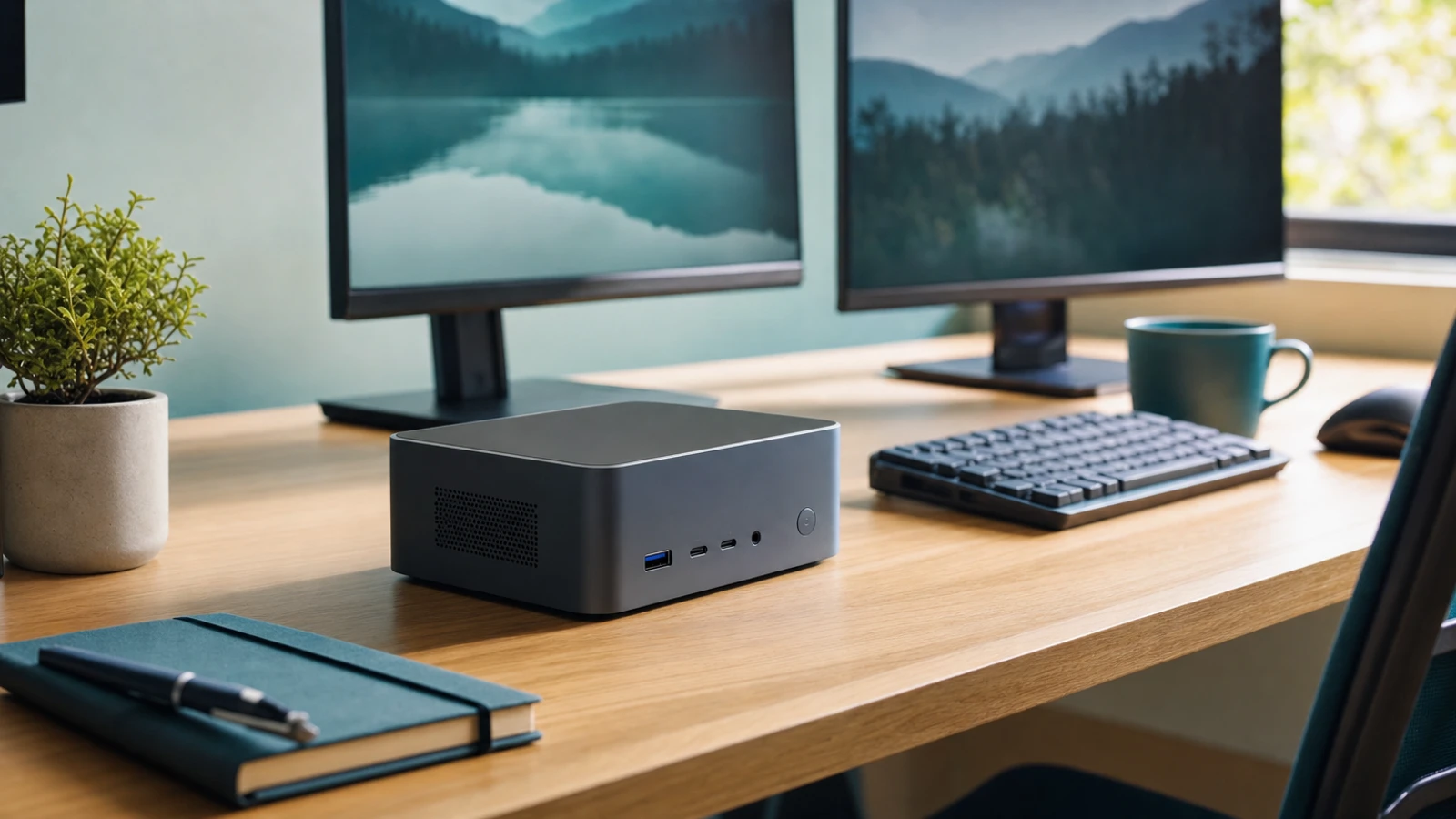
This support page focuses on ports, dual displays, and desk cable planning for mini PCs. The main shortlist covers products; this page keeps the setup decisions practical.
Ports, Dual Displays, and Desk Cable Planning
Count real devices. Before choosing, list keyboard, mouse, webcam, headset, printer, scanner, card reader, external drive, Ethernet, speakers, and monitors. A compact box with too few ports can create a messy hub chain that defeats the clean-desk goal.
Dual display support needs proof. Many office users want two screens, but output ports and resolution limits vary. Confirm the exact HDMI, DisplayPort, USB-C, or Thunderbolt behavior before assuming the mini PC will drive both monitors cleanly.
Ethernet can still matter. Wi-Fi is convenient, yet office printers, point-of-sale tools, file shares, and video calls may behave better on wired networking. A mini PC with built-in Ethernet can save adapter trouble.
Front ports change daily comfort. USB ports on the front make flash drives, scanners, and headsets easier. If every port is hidden behind a monitor, a small computer can become awkward even while taking almost no desk space.
Cable length decides placement. A mini PC mounted behind a monitor still needs power, display cables, USB access, and ventilation. Measure cable paths before buying mounts or assuming the box will disappear neatly.
Office setup decision notes
Office scenario 1: Count real devices. Recheck this point with the actual desk role in mind because before choosing, list keyboard, mouse, webcam, headset, printer, scanner, card reader, external drive, ethernet, speakers, and monitors. a compact box with too few ports can create a messy hub chain that defeats the clean-desk goal. A mini PC should make the station cleaner and easier to support, not simply smaller in a product photo.
Setup cue 1. For ports, dual displays, and desk cable planning, place the monitor, keyboard, mouse, webcam, printer or scanner cable, network cable, and power brick on a sketch of the desk. If the plan creates a hub chain, hidden heat pocket, or unreachable port, compare a different configuration before buying.
Return-window test 1. During the first week, install the real office apps, open the usual browser tabs, join a video call, connect every peripheral, and restart the machine after updates. That practical trial says more than a generic benchmark for basic office work.
Support note 1. Write down the exact ports used, display settings, login handoff, backup location, and restart steps for this station. If ports, dual displays, and desk cable planning matters to the desk role, a short setup note can save time when another employee, family member, or technician has to understand the compact computer later.
Budget check 1. Compare the mini PC price with the hidden extras: monitor cable, hub, mount, keyboard, mouse, webcam, speakers, Windows license, backup storage, and replacement power adapter. A slightly larger or better-equipped model can be cheaper in practice when it removes adapters and support calls.
Office scenario 2: Dual display support needs proof. Recheck this point with the actual desk role in mind because many office users want two screens, but output ports and resolution limits vary. confirm the exact hdmi, displayport, usb-c, or thunderbolt behavior before assuming the mini pc will drive both monitors cleanly. A mini PC should make the station cleaner and easier to support, not simply smaller in a product photo.
Setup cue 2. For ports, dual displays, and desk cable planning, place the monitor, keyboard, mouse, webcam, printer or scanner cable, network cable, and power brick on a sketch of the desk. If the plan creates a hub chain, hidden heat pocket, or unreachable port, compare a different configuration before buying.
Return-window test 2. During the first week, install the real office apps, open the usual browser tabs, join a video call, connect every peripheral, and restart the machine after updates. That practical trial says more than a generic benchmark for basic office work.
Support note 2. Write down the exact ports used, display settings, login handoff, backup location, and restart steps for this station. If ports, dual displays, and desk cable planning matters to the desk role, a short setup note can save time when another employee, family member, or technician has to understand the compact computer later.
Budget check 2. Compare the mini PC price with the hidden extras: monitor cable, hub, mount, keyboard, mouse, webcam, speakers, Windows license, backup storage, and replacement power adapter. A slightly larger or better-equipped model can be cheaper in practice when it removes adapters and support calls.
Office scenario 3: Ethernet can still matter. Recheck this point with the actual desk role in mind because wi-fi is convenient, yet office printers, point-of-sale tools, file shares, and video calls may behave better on wired networking. a mini pc with built-in ethernet can save adapter trouble. A mini PC should make the station cleaner and easier to support, not simply smaller in a product photo.
Setup cue 3. For ports, dual displays, and desk cable planning, place the monitor, keyboard, mouse, webcam, printer or scanner cable, network cable, and power brick on a sketch of the desk. If the plan creates a hub chain, hidden heat pocket, or unreachable port, compare a different configuration before buying.
Return-window test 3. During the first week, install the real office apps, open the usual browser tabs, join a video call, connect every peripheral, and restart the machine after updates. That practical trial says more than a generic benchmark for basic office work.
Support note 3. Write down the exact ports used, display settings, login handoff, backup location, and restart steps for this station. If ports, dual displays, and desk cable planning matters to the desk role, a short setup note can save time when another employee, family member, or technician has to understand the compact computer later.
Budget check 3. Compare the mini PC price with the hidden extras: monitor cable, hub, mount, keyboard, mouse, webcam, speakers, Windows license, backup storage, and replacement power adapter. A slightly larger or better-equipped model can be cheaper in practice when it removes adapters and support calls.
Office scenario 4: Front ports change daily comfort. Recheck this point with the actual desk role in mind because usb ports on the front make flash drives, scanners, and headsets easier. if every port is hidden behind a monitor, a small computer can become awkward even while taking almost no desk space. A mini PC should make the station cleaner and easier to support, not simply smaller in a product photo.
Setup cue 4. For ports, dual displays, and desk cable planning, place the monitor, keyboard, mouse, webcam, printer or scanner cable, network cable, and power brick on a sketch of the desk. If the plan creates a hub chain, hidden heat pocket, or unreachable port, compare a different configuration before buying.
Return-window test 4. During the first week, install the real office apps, open the usual browser tabs, join a video call, connect every peripheral, and restart the machine after updates. That practical trial says more than a generic benchmark for basic office work.
Support note 4. Write down the exact ports used, display settings, login handoff, backup location, and restart steps for this station. If ports, dual displays, and desk cable planning matters to the desk role, a short setup note can save time when another employee, family member, or technician has to understand the compact computer later.
Budget check 4. Compare the mini PC price with the hidden extras: monitor cable, hub, mount, keyboard, mouse, webcam, speakers, Windows license, backup storage, and replacement power adapter. A slightly larger or better-equipped model can be cheaper in practice when it removes adapters and support calls.
Office scenario 5: Cable length decides placement. Recheck this point with the actual desk role in mind because a mini pc mounted behind a monitor still needs power, display cables, usb access, and ventilation. measure cable paths before buying mounts or assuming the box will disappear neatly. A mini PC should make the station cleaner and easier to support, not simply smaller in a product photo.
Setup cue 5. For ports, dual displays, and desk cable planning, place the monitor, keyboard, mouse, webcam, printer or scanner cable, network cable, and power brick on a sketch of the desk. If the plan creates a hub chain, hidden heat pocket, or unreachable port, compare a different configuration before buying.
Return-window test 5. During the first week, install the real office apps, open the usual browser tabs, join a video call, connect every peripheral, and restart the machine after updates. That practical trial says more than a generic benchmark for basic office work.
Support note 5. Write down the exact ports used, display settings, login handoff, backup location, and restart steps for this station. If ports, dual displays, and desk cable planning matters to the desk role, a short setup note can save time when another employee, family member, or technician has to understand the compact computer later.
Budget check 5. Compare the mini PC price with the hidden extras: monitor cable, hub, mount, keyboard, mouse, webcam, speakers, Windows license, backup storage, and replacement power adapter. A slightly larger or better-equipped model can be cheaper in practice when it removes adapters and support calls.
Use the hub and related support pages to compare compact-computer details before replacing or adding an office workstation.