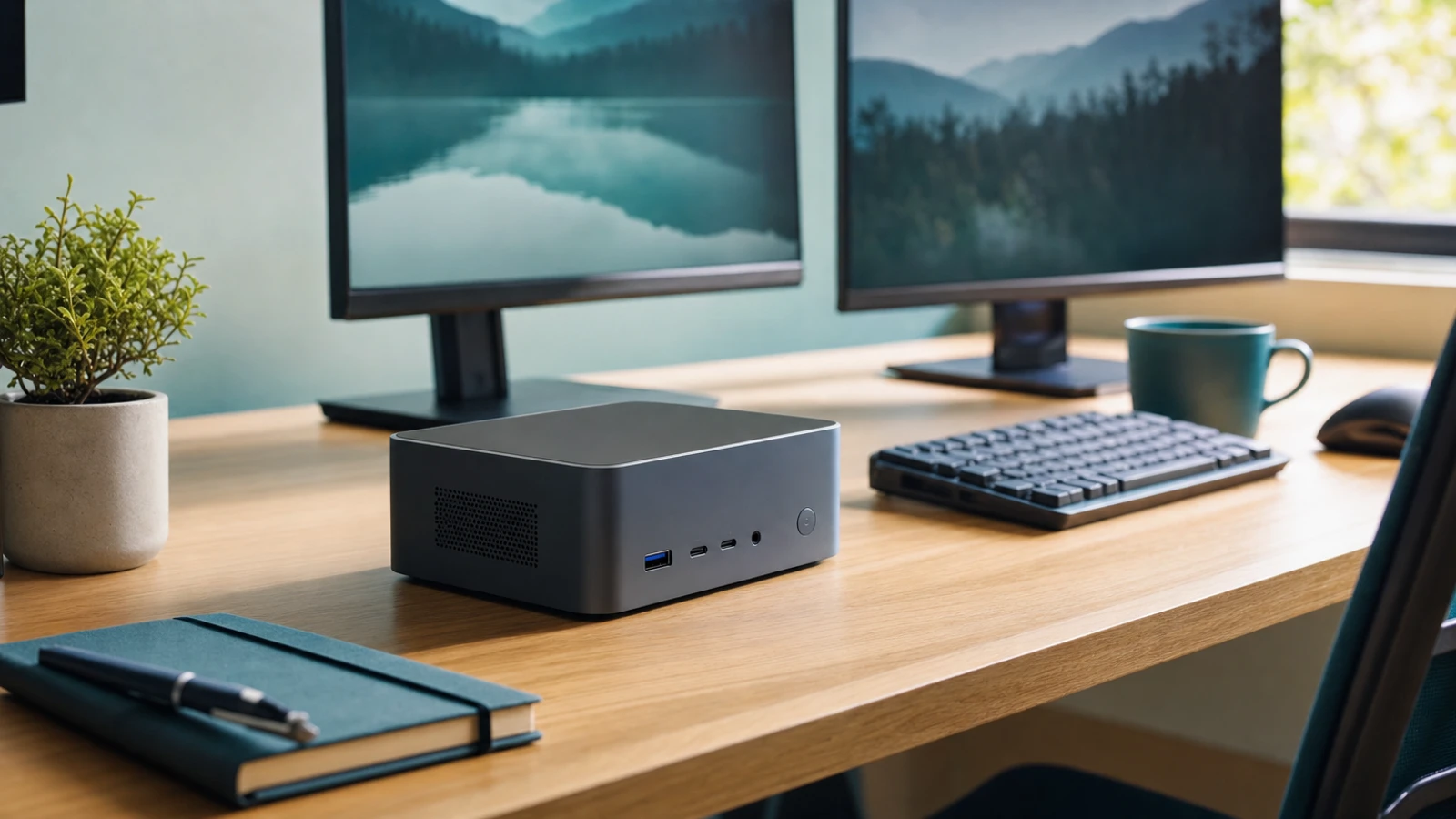
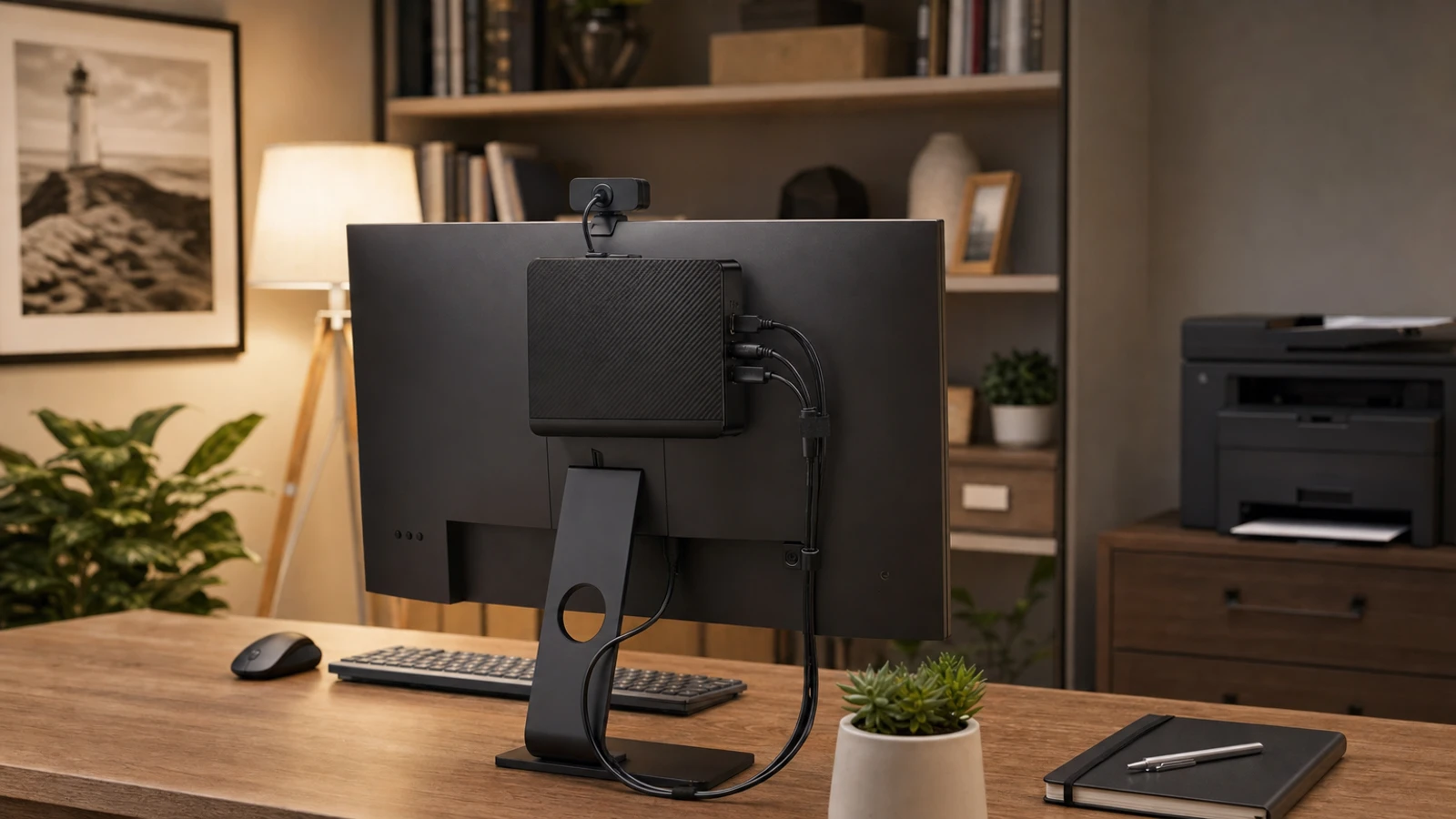
This support page focuses on noise, heat, and placement in quiet work areas for mini PCs. The main shortlist covers products; this page keeps the setup decisions practical.
Noise, Heat, and Placement in Quiet Work Areas
Quiet offices expose small fans. A mini PC that sounds fine in a store may be distracting in a quiet reception area or bedroom office. Look for comments about idle noise, fan ramping during calls, and whether the device hums on a desk.
Heat affects comfort and lifespan. Small cases concentrate heat. Good ventilation, sensible placement, and realistic workloads help the machine stay stable and comfortable over long days.
Do not bury the vents. A tiny computer is easy to tuck behind papers, under a shelf, or inside a cabinet. That can trap heat and dust. Leave room around vents and keep the power brick where it can breathe too.
Video calls raise the workload. Meetings, screen sharing, browser tabs, and background sync can make fans spin. If the station will host calls, judge noise and thermals under that kind of workload, not only at idle.
Dust planning is practical. Small office computers often sit near floors, printers, or fabric. Easy access for gentle cleaning can matter more than an invisible mounting spot.
Office setup decision notes
Office scenario 1: Quiet offices expose small fans. Recheck this point with the actual desk role in mind because a mini pc that sounds fine in a store may be distracting in a quiet reception area or bedroom office. look for comments about idle noise, fan ramping during calls, and whether the device hums on a desk. A mini PC should make the station cleaner and easier to support, not simply smaller in a product photo.
Setup cue 1. For noise, heat, and placement in quiet work areas, place the monitor, keyboard, mouse, webcam, printer or scanner cable, network cable, and power brick on a sketch of the desk. If the plan creates a hub chain, hidden heat pocket, or unreachable port, compare a different configuration before buying.
Return-window test 1. During the first week, install the real office apps, open the usual browser tabs, join a video call, connect every peripheral, and restart the machine after updates. That practical trial says more than a generic benchmark for basic office work.
Support note 1. Write down the exact ports used, display settings, login handoff, backup location, and restart steps for this station. If noise, heat, and placement in quiet work areas matters to the desk role, a short setup note can save time when another employee, family member, or technician has to understand the compact computer later.
Budget check 1. Compare the mini PC price with the hidden extras: monitor cable, hub, mount, keyboard, mouse, webcam, speakers, Windows license, backup storage, and replacement power adapter. A slightly larger or better-equipped model can be cheaper in practice when it removes adapters and support calls.
Office scenario 2: Heat affects comfort and lifespan. Recheck this point with the actual desk role in mind because small cases concentrate heat. good ventilation, sensible placement, and realistic workloads help the machine stay stable and comfortable over long days. A mini PC should make the station cleaner and easier to support, not simply smaller in a product photo.
Setup cue 2. For noise, heat, and placement in quiet work areas, place the monitor, keyboard, mouse, webcam, printer or scanner cable, network cable, and power brick on a sketch of the desk. If the plan creates a hub chain, hidden heat pocket, or unreachable port, compare a different configuration before buying.
Return-window test 2. During the first week, install the real office apps, open the usual browser tabs, join a video call, connect every peripheral, and restart the machine after updates. That practical trial says more than a generic benchmark for basic office work.
Support note 2. Write down the exact ports used, display settings, login handoff, backup location, and restart steps for this station. If noise, heat, and placement in quiet work areas matters to the desk role, a short setup note can save time when another employee, family member, or technician has to understand the compact computer later.
Budget check 2. Compare the mini PC price with the hidden extras: monitor cable, hub, mount, keyboard, mouse, webcam, speakers, Windows license, backup storage, and replacement power adapter. A slightly larger or better-equipped model can be cheaper in practice when it removes adapters and support calls.
Office scenario 3: Do not bury the vents. Recheck this point with the actual desk role in mind because a tiny computer is easy to tuck behind papers, under a shelf, or inside a cabinet. that can trap heat and dust. leave room around vents and keep the power brick where it can breathe too. A mini PC should make the station cleaner and easier to support, not simply smaller in a product photo.
Setup cue 3. For noise, heat, and placement in quiet work areas, place the monitor, keyboard, mouse, webcam, printer or scanner cable, network cable, and power brick on a sketch of the desk. If the plan creates a hub chain, hidden heat pocket, or unreachable port, compare a different configuration before buying.
Return-window test 3. During the first week, install the real office apps, open the usual browser tabs, join a video call, connect every peripheral, and restart the machine after updates. That practical trial says more than a generic benchmark for basic office work.
Support note 3. Write down the exact ports used, display settings, login handoff, backup location, and restart steps for this station. If noise, heat, and placement in quiet work areas matters to the desk role, a short setup note can save time when another employee, family member, or technician has to understand the compact computer later.
Budget check 3. Compare the mini PC price with the hidden extras: monitor cable, hub, mount, keyboard, mouse, webcam, speakers, Windows license, backup storage, and replacement power adapter. A slightly larger or better-equipped model can be cheaper in practice when it removes adapters and support calls.
Office scenario 4: Video calls raise the workload. Recheck this point with the actual desk role in mind because meetings, screen sharing, browser tabs, and background sync can make fans spin. if the station will host calls, judge noise and thermals under that kind of workload, not only at idle. A mini PC should make the station cleaner and easier to support, not simply smaller in a product photo.
Setup cue 4. For noise, heat, and placement in quiet work areas, place the monitor, keyboard, mouse, webcam, printer or scanner cable, network cable, and power brick on a sketch of the desk. If the plan creates a hub chain, hidden heat pocket, or unreachable port, compare a different configuration before buying.
Return-window test 4. During the first week, install the real office apps, open the usual browser tabs, join a video call, connect every peripheral, and restart the machine after updates. That practical trial says more than a generic benchmark for basic office work.
Support note 4. Write down the exact ports used, display settings, login handoff, backup location, and restart steps for this station. If noise, heat, and placement in quiet work areas matters to the desk role, a short setup note can save time when another employee, family member, or technician has to understand the compact computer later.
Budget check 4. Compare the mini PC price with the hidden extras: monitor cable, hub, mount, keyboard, mouse, webcam, speakers, Windows license, backup storage, and replacement power adapter. A slightly larger or better-equipped model can be cheaper in practice when it removes adapters and support calls.
Office scenario 5: Dust planning is practical. Recheck this point with the actual desk role in mind because small office computers often sit near floors, printers, or fabric. easy access for gentle cleaning can matter more than an invisible mounting spot. A mini PC should make the station cleaner and easier to support, not simply smaller in a product photo.
Setup cue 5. For noise, heat, and placement in quiet work areas, place the monitor, keyboard, mouse, webcam, printer or scanner cable, network cable, and power brick on a sketch of the desk. If the plan creates a hub chain, hidden heat pocket, or unreachable port, compare a different configuration before buying.
Return-window test 5. During the first week, install the real office apps, open the usual browser tabs, join a video call, connect every peripheral, and restart the machine after updates. That practical trial says more than a generic benchmark for basic office work.
Support note 5. Write down the exact ports used, display settings, login handoff, backup location, and restart steps for this station. If noise, heat, and placement in quiet work areas matters to the desk role, a short setup note can save time when another employee, family member, or technician has to understand the compact computer later.
Budget check 5. Compare the mini PC price with the hidden extras: monitor cable, hub, mount, keyboard, mouse, webcam, speakers, Windows license, backup storage, and replacement power adapter. A slightly larger or better-equipped model can be cheaper in practice when it removes adapters and support calls.
Use the hub and related support pages to compare compact-computer details before replacing or adding an office workstation.